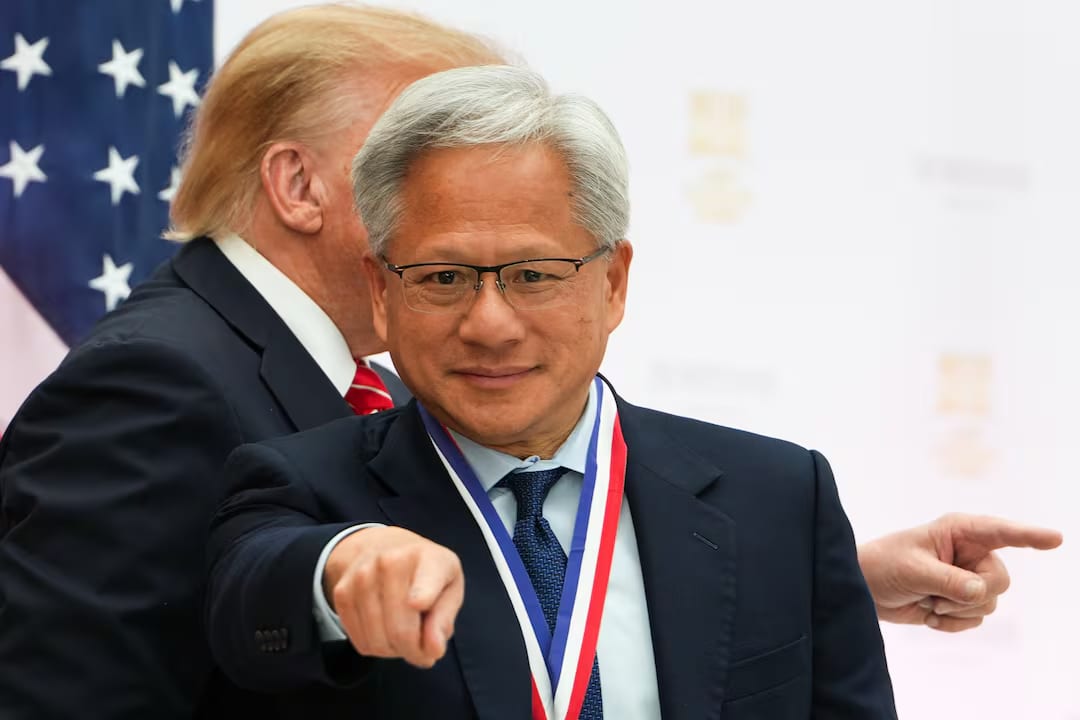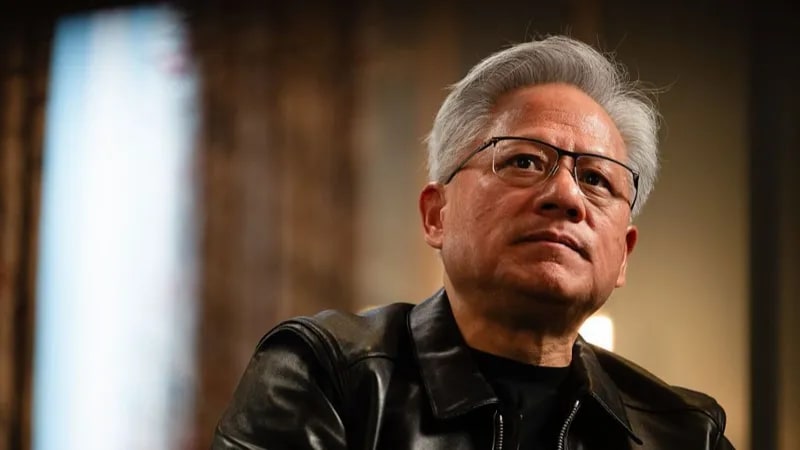
Former Nvidia CEO Jensen Huang is facing another allegation involving a personal relationship with a company employee, just hours after his resignation from the AI chipmaker. The latest report adds a new development to the controversy that has ended his 33-year tenure as chief executive of one of the world's most valuable technology companies.
The Jensen Huang third affair allegations emerged on November 12, 2026, following reports of two other relationships involving the Nvidia founder. According to a report published Thursday, two people familiar with the matter said Huang had an intimate relationship with another Nvidia employee whose identity has not been disclosed.
The new allegation follows earlier reports concerning Alice Huang, a Chinese businesswoman suspected by US intelligence officials of ties to Chinese intelligence, and Kimberly Powell, Nvidia's vice president of healthcare. While Huang previously acknowledged being unfaithful to his wife, he has not publicly confirmed the details of every relationship described in the reports.
The timing has intensified scrutiny of Nvidia's leadership and corporate governance. Earlier on Thursday, the company confirmed that Huang had resigned as president, CEO, and board member. Nvidia appointed longtime chief financial officer Colette Kress as interim CEO while its board searches for a permanent replacement.
The developments have also raised questions about the company's future. Nvidia has become a central supplier of advanced chips for artificial intelligence, and Huang played a leading role in shaping its position in that market. His sudden departure leaves the company managing a major leadership transition while questions surrounding his conduct continue to emerge.
Jensen Huang Third Affair Allegation Adds to Nvidia Controversy
The latest report alleges that Huang had a relationship with another woman employed by Nvidia. Two people familiar with the matter provided information about the alleged relationship. However, the report did not identify the employee or establish when the relationship began or ended.
The decision to withhold the woman's identity leaves several important questions unanswered. It is unclear what position she holds at Nvidia, whether she reported directly to Huang, or whether the alleged relationship created any workplace conflicts. There has also been no public finding that the relationship violated Nvidia's corporate policies.
The new allegation comes one day after reports surfaced about Huang's alleged relationship with Kimberly Powell. Powell serves as Nvidia's vice president of healthcare and was reportedly among the executives who answered directly to Huang. Five people familiar with the situation provided accounts of their alleged relationship to The New York Times.
According to that report, Huang and Powell were recorded behaving affectionately at a hotel in San Jose, California, during a conference earlier this year. The newspaper also reported that both executives were married. The allegations brought additional attention to Nvidia's workplace rules governing relationships between senior managers and employees.
Relationships involving executives and their direct reports can create concerns about conflicts of interest. These include questions about professional boundaries, favoritism, and whether employees feel comfortable raising complaints. However, the existence of a personal relationship does not automatically establish that improper workplace conduct occurred.
The earlier controversy involving Alice Huang raised a different set of concerns. US intelligence officials reportedly suspected the Chinese businesswoman of involvement in intelligence activities connected to Beijing. Those suspicions have not been established as facts through a publicly disclosed legal finding.
The allegations attracted attention because of Nvidia's importance to US national security and advanced semiconductor technology. Its AI processors are widely used in data centers, and Washington has imposed restrictions on exports of certain advanced chips to China.
Reports about Huang's relationship with Alice Huang therefore prompted questions about whether sensitive business information could have been exposed. However, an alleged personal connection does not establish that confidential information was shared or that an intelligence operation succeeded.
On November 8, Huang acknowledged an extramarital affair in a statement addressing the controversy. He did not publicly identify the person involved in that acknowledgment. Nvidia's independent directors also initiated a review into whether the executive had been targeted by a foreign intelligence operation.
The Jensen Huang third affair report adds another layer to the situation, but the allegations should be distinguished from confirmed corporate developments. Huang's resignation has been formally announced, while the details surrounding the newly reported relationship remain based on accounts from unnamed sources.
There is also no public evidence establishing that all three reported relationships involved violations of Nvidia's workplace policies. Any such determination would require additional facts, including whether potential conflicts were disclosed and how the company handled them.
Nevertheless, the successive reports have brought greater attention to the responsibilities of executives whose personal conduct may create legal, security, or workplace concerns. For Nvidia, those questions have become part of a wider discussion about how the company should manage its leadership and governance.
Nvidia Names Colette Kress Interim CEO as Jensen Huang Exits
Nvidia confirmed Huang's resignation on November 12, announcing that he had stepped down from his executive position and the board of directors. The company accepted his resignation effective immediately, bringing an abrupt end to a leadership tenure that began when Nvidia was founded in 1993.
Colette Kress, Nvidia's executive vice president and chief financial officer, has taken over as interim chief executive. She will continue handling her financial responsibilities while the company searches for a permanent CEO. Nvidia has indicated that both internal and external candidates will be considered.
Kress joined Nvidia in 2013 and has overseen the company's finances during a period of extraordinary expansion. Her experience includes financial leadership positions at Microsoft and Texas Instruments. She also has extensive knowledge of Nvidia's operations, investor relationships, and financial strategy.
The board has appointed Harvey C. Jones as its first chairman. Jones has served on Nvidia's board since 1993 and brings experience in technology investment and corporate leadership. His appointment establishes a separate board leadership position as Nvidia begins operating without its co-founder as CEO.
The leadership changes come at a difficult time for the semiconductor industry. Nvidia remains deeply involved in the global development of AI infrastructure, supplying processors and computing systems to cloud providers, research organizations, and technology companies.
Huang was closely associated with the company's strategy, product development, and relationships with major customers. His departure creates a challenge because Nvidia must maintain those operations while identifying a leader capable of managing its next stage of growth.
Investors have already responded to the uncertainty surrounding the company. Nvidia shares fell sharply following reports of the leadership crisis, reflecting concerns about the consequences of losing an executive who had directed the business for more than three decades.
The transition could also influence how investors assess Nvidia's long-term strategy. The company must continue developing advanced AI processors while responding to competition, export regulations, and growing demand for computing infrastructure.
Meanwhile, Huang's reported relationship with Alice Huang has attracted attention from US lawmakers. Congressional officials have sought information about the possible national security implications, and Huang has reportedly agreed to testify before Congress in the coming weeks.
The planned congressional proceedings could provide further information about the allegations involving the Chinese businesswoman. However, the scope of the hearings and the evidence lawmakers may examine have not been fully disclosed.
The Jensen Huang third affair allegation introduces additional uncertainty, but it does not change the immediate leadership arrangements announced by Nvidia. Kress is serving as interim CEO, and the company's board is responsible for selecting Huang's permanent successor.
Although Huang has left his executive and board positions, he remains a significant Nvidia shareholder. His financial interest in the company means its future performance will continue to matter to him, even without a formal management role.
For Nvidia, the immediate priority is maintaining confidence among employees, customers, and investors. The company must demonstrate that its operations and product development can continue without disruption while its leadership changes take effect.
The latest allegations also reinforce the importance of transparent corporate governance. As additional information emerges, attention will remain on whether Nvidia's internal policies were followed and how its board responds to any findings from the ongoing investigation.
Huang's resignation marks one of the most significant leadership changes in the AI industry this year. However, the newly reported relationship remains an allegation, and the available reporting does not establish every detail of the circumstances involved.
With Colette Kress now overseeing Nvidia's operations, the company faces the task of moving beyond the controversy while protecting its position in artificial intelligence. Its next major decision will be choosing a permanent CEO capable of leading the business through an increasingly competitive technology market.