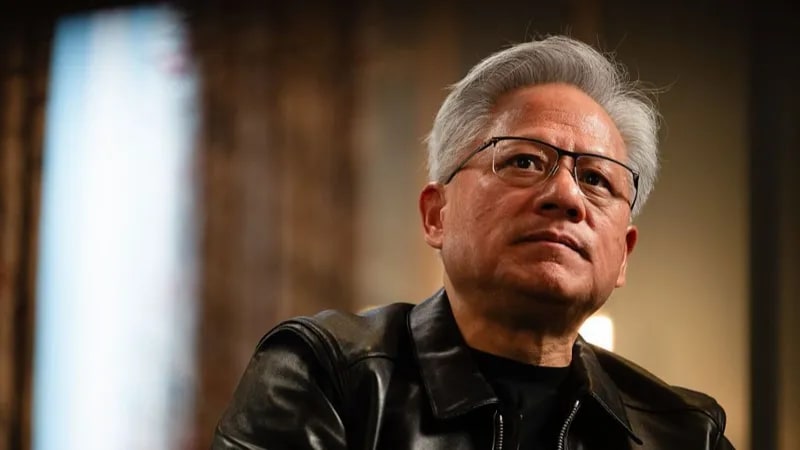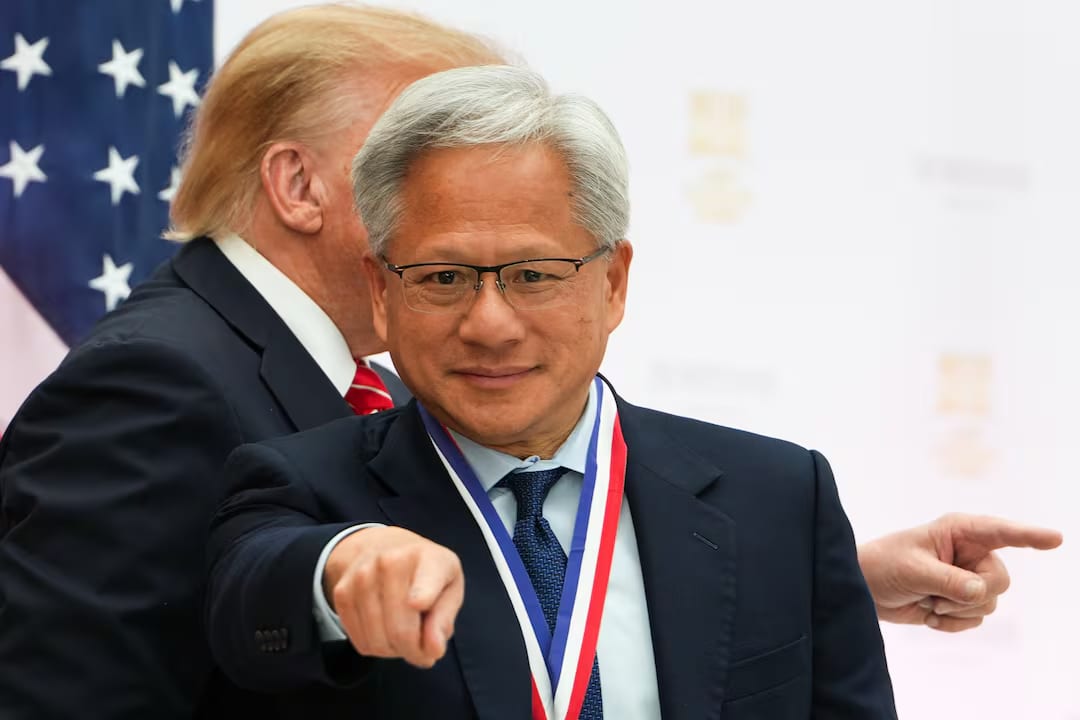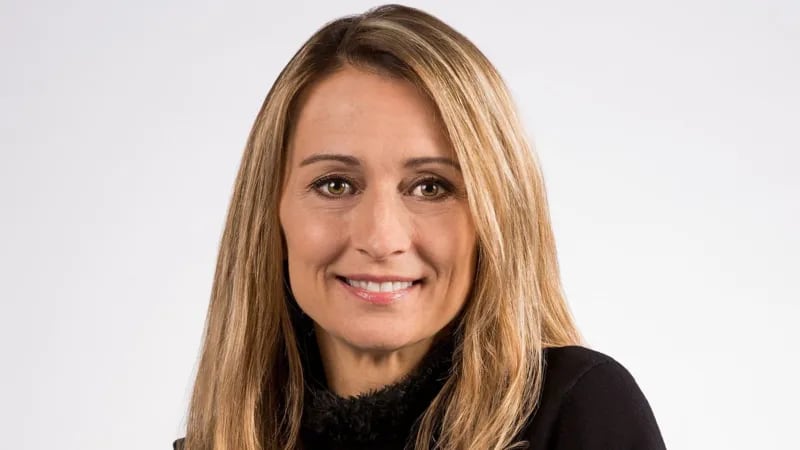
Colette Kress has stepped into one of the most demanding leadership positions in the technology industry following Jensen Huang's sudden resignation from Nvidia. The longtime finance executive is now responsible for guiding the AI chipmaker through a period of uncertainty while its board searches for a permanent chief executive.
The appointment of Colette Kress as interim CEO was confirmed on November 12, 2026, after Nvidia announced that Huang had resigned as president, chief executive officer, and board member. His departure followed reports about extramarital relationships, including one involving a Chinese businesswoman suspected by US intelligence officials of having intelligence ties. Those suspicions remain allegations, and the public reporting does not establish that Nvidia's confidential information was compromised.
For Nvidia, replacing Huang presents a challenge that goes beyond finding an experienced executive. He co-founded the company in 1993 and spent more than three decades building it into a leading supplier of processors used in artificial intelligence. His influence extended into engineering, corporate strategy, customer relationships, and major investment decisions.
Kress brings extensive financial experience and a deep understanding of Nvidia's operations. However, the company must decide whether its next permanent CEO should come from its existing leadership team or from another major technology business. Several prominent names have emerged as possible successors, although Nvidia has not announced an official shortlist.
The decision comes as investors reassess Nvidia's future without the executive most closely associated with its success. The company's shares faced sharp selling pressure following news of Huang's resignation. Meanwhile, questions surrounding corporate governance, leadership continuity, and the direction of Nvidia's AI strategy have become increasingly important.
Who Is Colette Kress, Nvidia's New Interim CEO?
Colette Kress is a veteran technology finance executive who has served as Nvidia's chief financial officer since September 2013. She joined the company after spending nearly 25 years in senior financial positions at established technology businesses. Her career includes leadership roles at Microsoft, Cisco, and Texas Instruments.
Before joining Nvidia, Kress served as senior vice president and chief financial officer of Cisco's Business Technology and Operations Finance organization. There, she oversaw financial strategy, planning, reporting, and business development across several operational areas. The experience gave her considerable exposure to the financial demands of a large technology company.
Earlier, she spent 13 years at Microsoft, including four years as chief financial officer of its Server and Tools division. Her responsibilities covered corporate planning and financial management during an important period in Microsoft's enterprise software business. She also held several financial positions at Texas Instruments before moving into more senior leadership roles.
Kress earned a bachelor's degree in finance from the University of Arizona and an MBA from Southern Methodist University. Her education and professional experience have centered on financial management, business operations, and corporate strategy. These skills have become increasingly valuable as Nvidia's operations have expanded.
Since joining Nvidia, Kress has helped oversee the company's financial transformation during the growth of accelerated computing and artificial intelligence. She has worked alongside Huang as Nvidia moved from its traditional graphics processing business into a much broader technology market. Today, its processors support AI development, cloud computing, scientific research, and other demanding applications.
As chief financial officer, Kress has played an important role in communicating Nvidia's financial performance to investors. She regularly participates in earnings calls and explains the company's revenue, spending, and business outlook. That visibility has made her a familiar figure among analysts following Nvidia's stock.
Her appointment as interim CEO therefore offers some continuity during an unexpected leadership transition. Investors already know her professional background and understand her role in managing Nvidia's financial operations. She also has direct experience with the company's business priorities and major financial commitments.
According to Nvidia's regulatory filing, Kress will continue serving as chief financial officer while carrying out her interim CEO responsibilities. The arrangement allows her to maintain oversight of financial operations as the board evaluates permanent leadership candidates. However, the company has not announced how long the search will take.
The leadership transition has also brought changes to Nvidia's board. Harvey C. Jones, a director who has served since 1993, has been appointed chairman. His appointment establishes a separate board leadership position during a period when the company is facing increased scrutiny.
Although Kress has the experience to manage a large public company, analysts have raised questions about whether she is the natural choice for Nvidia's permanent leadership. The company's competitive advantage depends heavily on engineering innovation and long-term technology decisions. Some investors may therefore prefer a chief executive with extensive experience developing semiconductor products.
That does not rule Kress out of consideration. Her understanding of Nvidia's finances, customers, and corporate structure could make her a credible candidate. However, the board will need to determine whether its priorities favor management stability, technical expertise, or a combination of both.
Who Could Replace Jensen Huang Permanently as Nvidia CEO?
Nvidia has confirmed that its search for a permanent chief executive will consider candidates from inside and outside the company. Several technology leaders have already been mentioned by industry observers. Each offers a different set of strengths, but none has been confirmed as the board's preferred successor.
Chris Malachowsky — Nvidia Co-Founder and Senior Technology Executive
Chris Malachowsky is one of the most experienced executives still closely associated with Nvidia's founding. He established the company alongside Jensen Huang and Curtis Priem in 1993. Since then, he has contributed to its technology development, engineering operations, and long-term research priorities.
Malachowsky currently serves as an Nvidia Fellow and senior technology executive. His background includes work on the company's computing technologies and experience overseeing major engineering functions. That history could make him an attractive candidate if the board wants a leader who understands Nvidia's technical culture.
However, running Nvidia today would be very different from managing the company during its earlier years. The business now operates across a complicated network of chip manufacturers, cloud providers, governments, and AI developers. Although Malachowsky offers strong technical credibility, the board would need to assess his ability and willingness to manage those broader responsibilities.
Ian Buck — Nvidia Executive Behind CUDA Computing
Ian Buck is another potential internal candidate with strong engineering credentials. He played an important role in developing CUDA, Nvidia's software platform that allows graphics processors to perform demanding computing tasks. That technology has helped establish Nvidia's position in artificial intelligence and scientific computing.
Buck joined Nvidia in 2004 and has held leadership responsibilities involving high-performance computing and hyperscale AI systems. His work connects Nvidia's hardware development with the software and computing infrastructure used by major customers. This makes him familiar with technologies that underpin the company's competitive advantage.
If the board prioritizes engineering leadership, Buck could receive serious consideration. However, becoming CEO would require him to oversee financial strategy, international relationships, regulatory issues, and corporate governance. His ability to manage those areas would be an important consideration.
Rene Haas — Arm CEO With Semiconductor Leadership Experience
Rene Haas is among the external executives whose names have entered the succession conversation. He currently leads Arm Holdings, a semiconductor technology company whose designs are used in devices ranging from smartphones to data center systems. His experience offers a combination of technical knowledge and public-company leadership.
Haas became Arm's chief executive in 2022 and guided the company through its return to public markets in 2023. He has also worked on expanding Arm's position in AI computing and other high-growth technology markets. Before joining Arm, Haas spent several years at Nvidia in a senior business leadership role.
That previous connection to Nvidia could make him an interesting candidate. Haas understands the semiconductor industry and has experience managing relationships with technology manufacturers. However, Nvidia and Arm operate different business models, and leaving Arm would be a major professional decision.
Tim Cook — Former Apple CEO With Global Operations Experience
Tim Cook has also been mentioned as a possible outside candidate. His long career at Apple gave him extensive experience overseeing global operations, manufacturing partnerships, and large-scale supply chains. These capabilities could be relevant to Nvidia, which depends on several major suppliers to manufacture its products.
Cook is widely associated with Apple's operational expansion and its ability to manage complex relationships with manufacturers worldwide. Nvidia faces similar challenges involving chip production capacity, advanced memory, and access to critical semiconductor components. A leader with strong supply chain knowledge could help manage those pressures.
However, Cook's background differs significantly from Huang's engineering-focused leadership. Nvidia's board would need to consider whether operational experience alone would be sufficient for its next phase of development. There is also no confirmed indication that Cook is interested in the position.
Colette Kress — Could Nvidia's Interim CEO Become Permanent?
Kress remains an important part of the succession discussion because she is already leading Nvidia during the transition. Her familiarity with investors and company operations could help maintain stability while the board conducts its search. She also has experience managing financial decisions during periods of rapid business expansion.
However, the permanent position would require a broader mandate. Nvidia's next CEO must guide the development of advanced processors, oversee major technology partnerships, and respond to growing competition. The board may decide that an executive with stronger technical credentials would be better suited to those responsibilities.
Still, Kress has an opportunity to demonstrate her leadership during the interim period. How she manages investor communication, business continuity, and the company's upcoming financial results could influence perceptions of her suitability. For now, she remains the only confirmed executive appointed to lead Nvidia following Huang's departure.
What Nvidia's Leadership Change Means for Investors
The search for a permanent CEO comes as Nvidia faces one of the most important transitions in its history. Huang was deeply involved in the company's technology decisions and maintained close relationships with major customers. Replacing that combination of technical knowledge and industry influence will be difficult.
Nvidia's shares opened more than 13% lower following the resignation announcement, according to the supplied market reporting. The decline reflected concerns about leadership uncertainty and the potential consequences for the company's business strategy. Share prices may continue to respond to developments surrounding the succession process.
The company also faces a demanding competitive environment. AMD, Broadcom, and other semiconductor businesses are investing heavily in AI technology. Meanwhile, major cloud companies are developing their own computing systems, creating additional pressure on Nvidia to maintain its technological advantage.
Beyond competition, Nvidia must manage relationships with manufacturing partners such as TSMC, Samsung, and SK Hynix. These companies play important roles in the supply chain supporting advanced AI hardware. A permanent CEO will need to maintain those partnerships while planning for future demand.
Corporate governance will also remain central to the leadership transition. The reports surrounding Huang's personal conduct have raised questions about executive accountability and board oversight. Nvidia's directors must now demonstrate that the company can maintain effective leadership and decision-making without its longtime founder at the top.
For Colette Kress, the immediate challenge is keeping Nvidia's operations stable while the board evaluates its options. Her appointment provides continuity, but it does not settle the question of who should lead the company permanently. The coming weeks will reveal whether Nvidia chooses a familiar executive or turns to an established leader from elsewhere in the technology industry.
Whatever direction the board takes, the decision will shape Nvidia's next chapter. The company has spent decades building its position in accelerated computing and artificial intelligence. Its next CEO must protect that foundation while proving that Nvidia's future does not depend on a single individual.