Nebius is preparing to spend as much as $45 billion on artificial intelligence infrastructure in 2027, even as delays at a major Microsoft data center raise concerns about the company's aggressive expansion strategy. The ambitious investment plan has placed the AI cloud provider under fresh scrutiny as investors question whether demand for computing power can justify its rising costs.
The Nebius spending plan was revealed during the company's third-quarter earnings announcement on November 12, 2026. Management expects capital expenditure of between $40 billion and $45 billion next year, significantly above Wall Street's previous expectations. The money will support new data centers, advanced computing equipment, and infrastructure needed to serve major AI customers.
However, the announcement comes as Nebius faces delays in delivering computing capacity under a multibillion-dollar agreement with Microsoft. A data center in Vineland, New Jersey, has fallen behind schedule, creating uncertainty about when the company can begin generating revenue from the remaining contracted capacity.
Despite these challenges, Nebius reported third-quarter revenue of approximately $981 million, representing a 571% increase from the previous year. The impressive growth highlights demand for AI computing infrastructure. Yet the company has lowered its near-term revenue expectations because several projects will take longer than planned to become operational.
Investors reacted negatively to the combination of higher spending and delayed revenue. Nebius shares fell approximately 17% on Thursday, reflecting concerns about the financial risks of building expensive data centers before they begin producing returns.
Nebius $45 Billion Spending Plan Depends on Major AI Contracts
Nebius operates in a growing segment of the cloud computing industry known as neoclouds. These companies specialize in providing powerful computing infrastructure for artificial intelligence applications, particularly workloads requiring advanced graphics processing units.
Unlike traditional cloud providers that offer a broad range of digital services, neocloud companies focus heavily on infrastructure for training and running AI models. Their customers include technology companies, AI developers, and businesses building applications that require substantial computing power.
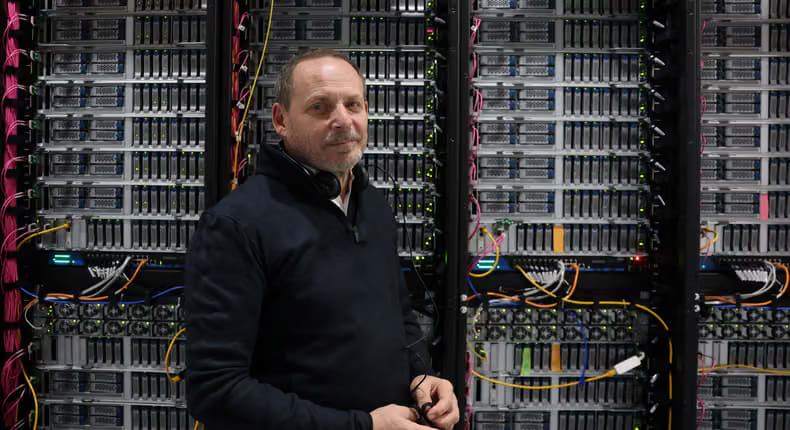
Nebius is led by CEO Arkady Volozh, who has positioned the company as a major supplier of AI infrastructure. Its business involves building and operating data centers equipped with high-performance computing systems. Customers then pay to access that computing capacity under commercial agreements.
The proposed spending represents a major increase from the company's already substantial 2026 investment programme. Nebius now expects capital expenditure of approximately $27 billion this year, compared with its previous forecast of $20 billion to $25 billion.
For 2027, the company plans to spend between $40 billion and $45 billion. This would make its annual infrastructure investment several times larger than its projected revenue. Such a strategy reflects expectations that demand for AI computing will continue expanding rapidly.
However, financing the construction of these facilities presents a major challenge. Data centers require enormous upfront investment in processors, networking equipment, cooling systems, power infrastructure, and buildings. Companies often incur these expenses long before customers begin paying for the completed capacity.
Nebius plans to address this problem by using advance payments from customers and financing secured against existing contracts. The company expects these funding sources to cover approximately 75% to 85% of its planned 2027 capital expenditure.
This approach allows Nebius to use the expected value of future computing services to support current construction costs. For example, a customer that agrees to purchase computing capacity under a long-term contract may provide an upfront payment. Nebius can then use that money to help finance the infrastructure required to deliver the service.
The company can also borrow against contracts with financially strong customers. Lenders may be more willing to provide financing when repayment is supported by agreements involving established technology businesses.
Microsoft and Meta are among the customers whose contracts could support this financing structure. Their demand for AI computing capacity provides Nebius with a substantial pipeline of future business.
During the earnings call, Nebius executives said customer prepayments associated with new third-quarter contracts exceeded the capital expenditure required to build the contracted capacity. This suggests that some projects can be substantially funded before they become operational.
Nevertheless, this financing model creates risks when projects fall behind schedule. Customer payments and loans may help cover construction expenses, but delays can postpone revenue and increase operating costs. Depending on contract terms, missed delivery deadlines could also expose Nebius to financial penalties.
The company ended September with approximately $7.4 billion in cash. Although that provides financial flexibility, the amount is considerably smaller than its proposed infrastructure spending for 2027.
As a result, Nebius must continue securing customer payments, financing arrangements, and reliable construction schedules to support its expansion.
Microsoft Data Center Delays Threaten Nebius Revenue Growth
One of the biggest challenges facing Nebius involves its agreement with Microsoft, which could be worth up to $19.4 billion. The contract covers AI computing capacity delivered through infrastructure projects, including a data center in Vineland, New Jersey.
However, the New Jersey facility has experienced significant delays. Nebius now expects only slightly more than half of the contracted Microsoft capacity at that location to become available before the end of 2026. The remaining capacity is scheduled for delivery during the second quarter of 2027.
The delay is linked partly to changes in the site's power infrastructure. DataOne, the third-party operator responsible for the facility, has been transitioning away from temporary natural gas generators toward Bloom Energy fuel-cell systems.
That process became more complicated after New Jersey environmental regulators identified unauthorized power generation equipment at the site. In September, the state's Department of Environmental Protection announced a penalty of approximately $1.07 million against DataOne.
Regulators said the facility had installed and operated 62 large natural gas generators without the required environmental permits. The enforcement action highlighted the challenges data center developers face when attempting to secure enough electricity for increasingly demanding AI operations.
The Vineland project has also faced complaints from nearby residents concerning noise generated by the facility. These issues demonstrate how infrastructure projects can encounter regulatory and community challenges even when customers are prepared to pay for the computing services.
Under the terms of Nebius's Microsoft agreement, missed delivery deadlines could trigger contractual consequences. Microsoft may have the right to terminate affected services after specified grace periods if alternative capacity is not provided. Financial penalties may also apply, depending on the circumstances.
However, Microsoft has not publicly announced the cancellation of its agreement with Nebius. Company executives have said the customer was involved in planning the revised delivery schedule, although they have not confirmed whether all revised dates have received formal approval.
The situation has increased attention on the wider neocloud industry. Microsoft has reportedly become more cautious about certain third-party infrastructure projects following construction delays and rising costs. Other AI infrastructure providers, including IREN and Nscale, have also faced questions about project execution.
For Nebius, the immediate consequence is slower revenue recognition. Computing capacity cannot generate its expected service revenue until it becomes available to customers. Therefore, even projects backed by major contracts can create financial pressure when construction or commissioning takes longer than planned.
Nebius now expects 2026 revenue of approximately $3 billion to $3.2 billion, narrowing its previous forecast of $3 billion to $3.4 billion. The revision reflects delays affecting third-party facilities, including the New Jersey project.
The company has also pushed back its target of exceeding $7 billion in annualized revenue run rate. Management previously expected to reach that milestone by December 2026, but now anticipates achieving it in February 2027.
Despite the setbacks, Nebius remains optimistic about its longer-term growth. The company forecasts between $12 billion and $13 billion in revenue for 2027 and expects to reach pre-tax break-even during the fourth quarter.
Management also maintains that its directly developed data centers are progressing on schedule or ahead of expectations. These company-controlled projects are expected to provide most of the new computing capacity entering service from 2027.
That distinction could become important as Nebius expands. Greater control over construction, power arrangements, and project timelines may help reduce dependence on third-party operators. However, developing facilities directly also requires considerable investment and operational expertise.
The company's third-quarter results show both the opportunities and risks of its strategy. Revenue growth of 571% demonstrates strong demand, but approximately $325 million of the reported revenue came from a non-recurring payment related to a new partnership arrangement.
Excluding that payment, revenue would have been lower, although the underlying business continued expanding. Investors will therefore need to examine how much of Nebius's future growth comes from ongoing computing services rather than one-time transactions.
The central question is whether Nebius can convert its ambitious infrastructure plans into dependable revenue. Strong customer demand provides an important foundation, but building data centers requires reliable access to electricity, equipment, financing, and construction services.
For investors, the company's $40 billion to $45 billion spending outlook represents a substantial commitment to the future of artificial intelligence. It could help Nebius become a major competitor in AI cloud infrastructure if projects are completed on time.
However, the Microsoft delays show how quickly financial expectations can change when critical infrastructure encounters problems. With billions of dollars committed to future development, Nebius must demonstrate that its construction capabilities can keep pace with customer demand.
The company's next phase will depend on delivering operational capacity, maintaining customer confidence, and controlling the financial risks associated with rapid expansion. Its latest earnings suggest the market for AI computing remains strong, but turning that demand into profitable growth will require disciplined execution.