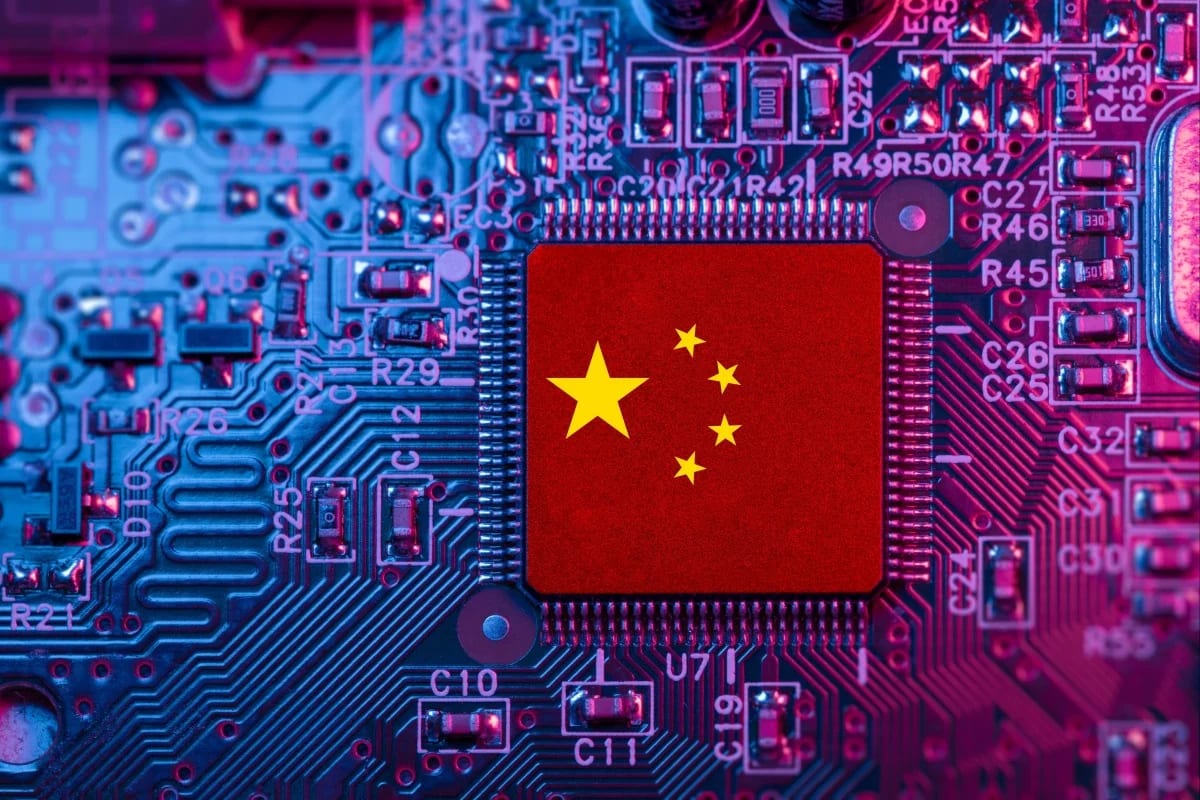
China taps US AI models to accelerate the development of its own artificial intelligence systems as Washington tightens restrictions on advanced semiconductor exports. New findings published on November 17, 2026, show that Chinese researchers and technology companies are increasingly using outputs from American AI models to train smaller domestic alternatives. The approach could help Chinese developers improve their systems without relying as heavily on expensive computing infrastructure.
The growing practice, known as AI model distillation, has become an important part of China's efforts to remain competitive in artificial intelligence. Researchers use advanced models to generate answers, solve complex problems, and produce computer code. They then turn those results into training materials for less powerful systems that can perform similar tasks at a lower operating cost.
A review of more than 300 Chinese research papers, patents, company documents, recruitment notices, and government publications found that distillation is moving beyond university experiments into commercial applications. Chinese organisations are developing automated tools to collect model outputs and prepare them for further training. Meanwhile, government initiatives are encouraging the development of cheaper AI systems that businesses can deploy across manufacturing and other industries.
The developments have also created tension between Beijing and Washington. American officials argue that some large-scale efforts to extract knowledge from US models may violate intellectual-property rights or service agreements. Chinese officials maintain that distillation is a widely used AI development technique and should not automatically be treated as misconduct.
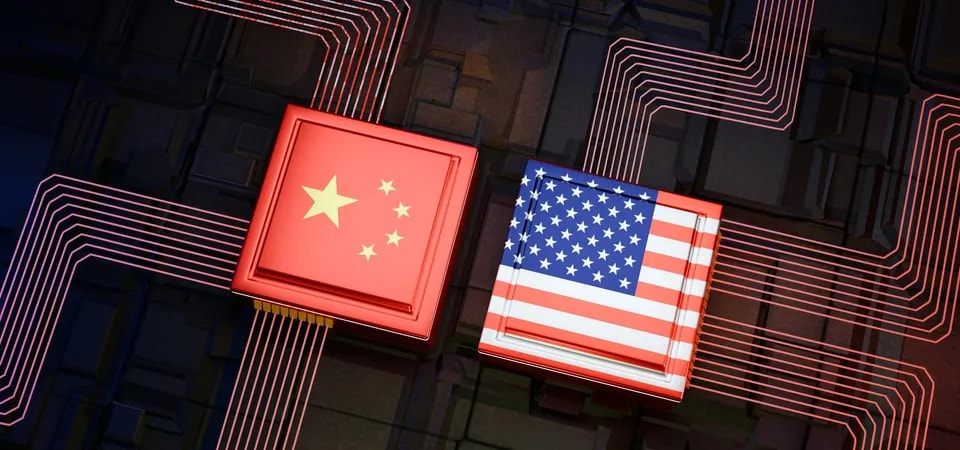
The issue has become more urgent as the United States expands restrictions on China's access to advanced AI chips. On November 16, American authorities announced additional controls intended to prevent restricted foreign companies from accessing powerful US computing technology through overseas data centres.
As China taps US AI models to support domestic development, the dispute is raising a difficult question for the global technology industry: where should regulators draw the line between legitimate machine learning research and the unauthorised commercial use of another company's technology?
How China Taps US AI Models to Train Cheaper Domestic Systems
Training advanced artificial intelligence models requires large amounts of computing power, high-quality data, and substantial financial investment. Companies developing these systems often spend considerable resources building infrastructure before their models become commercially useful. For Chinese developers facing limited access to advanced American chips, finding ways to reduce these costs has become increasingly important.
Model distillation offers one possible solution. The process involves using a powerful AI system, often described as a teacher model, to generate examples that help train a smaller student model. Instead of learning everything directly from enormous datasets, the smaller system can learn from selected responses produced by an already capable model.
For example, a developer might ask an advanced AI model to solve a programming problem and explain the steps involved. The response can then become part of a training dataset used to improve another system's coding abilities. Repeating this process across different tasks can help the smaller model develop useful skills without requiring the same amount of training infrastructure.
However, distillation does not create an identical copy of the original model. Smaller systems may perform well on selected tasks while lacking the broader capabilities of the more advanced technology. Developers still need computing resources, suitable datasets, and effective training methods to produce reliable results.
Evidence of how China taps US AI models can be found in research involving several prominent Chinese institutions and technology companies. Their projects demonstrate how outputs from American systems have been used to improve local models in areas such as reasoning, multilingual communication, and software development.
In November 2024, researchers at Shanghai Jiao Tong University described a project using OpenAI's o1 reasoning model. They selected approximately 5,000 responses from the American system and used GPT-4o mini to translate material into another language. The researchers eventually assembled 10,750 bilingual training examples for further training of Alibaba's Qwen2.5-72B model.
The project demonstrated how developers could convert expensive model responses into reusable training resources. Once the material had been prepared, it could support repeated training experiments without requiring the same questions to be submitted to the original system each time. This approach can make the development process more efficient when computing resources are limited.
Alibaba researchers explored a similar method in April 2025. Their work involved using OpenAI's GPT-4 and GPT-4o models to generate training material in languages other than Chinese. The responses were subsequently refined, evaluated, and used to improve smaller models within the Qwen family.
Such projects are significant because Chinese AI companies increasingly want their products to serve international users. Models capable of understanding multiple languages can support customer service, software development, education, and other applications. Distillation may help developers improve these capabilities without building a separate large model for every language.
Another example emerged in February 2026 through research involving Shanghai Jiao Tong University and Chinese technology company Meituan. The researchers used GPT-4o to generate plans for coordinating multiple AI agents working on programming problems. Those examples helped train a smaller system to organise similar tasks.
This research reflects growing interest in AI agents that can perform several connected activities rather than answer individual questions. Businesses may use these systems to coordinate software development, analyse information, and automate administrative processes. Training smaller models for these activities could make AI agents more affordable to deploy.
As China taps US AI models for these specialised applications, domestic developers are also improving their own training techniques. Advances in model architecture, data preparation, and software optimisation can contribute to stronger performance. Distillation is one factor in that development, but it does not explain every improvement in Chinese artificial intelligence.
Chinese researchers have also acknowledged possible limitations. Excessive dependence on foreign model outputs could discourage original research and leave domestic developers relying on technologies created elsewhere. For China to establish lasting competitiveness, its companies will still need to develop independent capabilities.
Beijing's industrial policies indicate that the government wants AI adoption to expand well beyond major technology companies. In January 2026, eight Chinese government agencies introduced an AI and manufacturing initiative designed to accelerate the use of artificial intelligence across the country's industrial economy.
The programme supports improvements in model training, fine-tuning, and methods that reduce computing requirements. It also encourages the development of specialised AI systems for manufacturing applications. By 2027, China aims to establish broader industrial use of several general-purpose models while developing high-quality datasets and practical applications.
This strategy could benefit manufacturers that need AI for particular tasks but cannot justify the cost of operating extremely large models. Smaller systems may support quality inspection, equipment maintenance, production planning, and document processing. Their usefulness depends on accuracy, reliability, and how well they integrate with existing industrial systems.
The interest in distillation also reflects China's wider ambition to reduce dependence on foreign technology. Semiconductor restrictions have made access to some advanced computing equipment more difficult, encouraging domestic companies to explore alternative approaches. However, efficient model training cannot fully replace the need for powerful chips, especially when developing the next generation of frontier AI systems.
Why US Chip Restrictions Are Turning AI Distillation Into a Trade Dispute
The expanding use of American model outputs has become a contentious issue between the United States and China. While distillation is a recognised machine learning technique, its commercial application can raise questions about licensing agreements and intellectual-property protection. The central disagreement concerns when model training crosses from permitted research into unauthorised use of another company's technology.
OpenAI restricts customers from using its models or outputs to develop competing systems, subject to specified exceptions. Anthropic maintains similar restrictions concerning the use of Claude outputs to train rival products. These policies are intended to protect the companies' investment in model development and prevent competitors from reproducing capabilities through their services without permission.
However, a violation of a company's service terms is not automatically the same as intellectual-property theft. Whether a particular activity breaches contractual obligations or applicable law depends on the circumstances. Researchers may also have different permissions depending on the model, licence, and services involved.
American officials have become increasingly concerned about organised attempts to collect large amounts of output from leading US models. In September 2026, authorities publicly accused Chinese AI companies of conducting aggressive distillation activities on an industrial scale. The allegations intensified scrutiny of how foreign developers access American AI platforms.
The disagreement had already surfaced during meetings between American and Chinese officials in Chengdu in July. US Commerce Department representatives reportedly raised concerns about Chinese developers systematically collecting responses from advanced American models. They warned that certain activities could amount to intellectual-property theft.
Chinese representatives defended distillation as an established development method used internationally. They also indicated that actions involving actual intellectual-property violations could be addressed through existing legal processes. However, the discussions did not produce a publicly announced agreement establishing acceptable boundaries.
The debate has since become closely connected to US semiconductor policy. Washington has restricted exports of certain advanced AI processors to China, arguing that the technology could support military and intelligence capabilities. These restrictions affect some of the hardware required to train and operate the most powerful AI models.
On November 16, 2026, the US Commerce Department announced new rules addressing remote access to advanced computing systems. The measures target arrangements in which companies from restricted countries obtain computing power through data centres operating elsewhere. Their purpose is to prevent overseas infrastructure from becoming an alternative route to technology covered by US export controls.
The distinction matters because Chinese companies do not necessarily need to possess American processors physically to benefit from their computing power. Cloud services can provide remote access to infrastructure located in other countries. The new restrictions seek to address certain arrangements that could otherwise weaken export controls.
Nevertheless, the restrictions on computing hardware are separate from the rules governing AI model outputs. Preventing access to advanced chips does not automatically stop developers from studying or using results generated by American AI services. This creates an additional policy challenge for Washington.
The fact that China taps US AI models also complicates efforts to limit the spread of advanced AI capabilities through hardware controls alone. Distillation can transfer selected skills into smaller systems, although it cannot eliminate the need for powerful computing resources. As a result, policymakers must consider both the infrastructure used to develop AI and the terms under which model capabilities are shared.
US Treasury Secretary Scott Bessent has warned that covert, industrial-scale distillation involving intellectual-property theft could trigger sanctions or restrictions on targeted companies. Such measures would require authorities to distinguish prohibited conduct from legitimate research and commercial development. The difficulty lies in establishing clear standards that can be applied consistently.
The issue is especially sensitive ahead of the Asia-Pacific Economic Cooperation meetings scheduled for November 18 and 19 in Shenzhen. US President Donald Trump and Chinese President Xi Jinping are expected to meet during the gathering, placing technology restrictions among the issues shaping their economic relationship.
For American AI companies, the concern is protecting commercially valuable models while continuing to attract international users. Their systems benefit from broad adoption, but large-scale extraction of outputs could help create competing products. Balancing accessibility and commercial protection will remain a difficult challenge.
Chinese developers face a different set of pressures. They must improve domestic AI performance while managing limited access to advanced processors and uncertainty surrounding foreign AI services. Distillation offers opportunities to reduce some development costs, but relying too heavily on external models may create long-term technological dependence.
Some Chinese companies have reportedly requested clearer guidance from domestic regulators about acceptable uses of foreign model outputs. Their concerns reflect uncertainty over the distinction between routine model evaluation, legitimate research, and organised training activities that may breach provider restrictions.
The latest findings show that China's AI strategy increasingly combines domestic innovation with techniques that draw on existing international systems. That approach is helping Chinese developers pursue more affordable AI applications, particularly in industries where specialised performance matters more than operating the largest available models.
As China taps US AI models while Washington strengthens technology restrictions, both countries face difficult decisions about how AI development should be governed. The outcome could affect global model access, international research partnerships, and competition between American and Chinese AI companies.
For now, distillation remains a useful but disputed development technique. Its growing role in China's technology strategy demonstrates that controlling access to advanced chips is only one part of the wider competition over artificial intelligence.