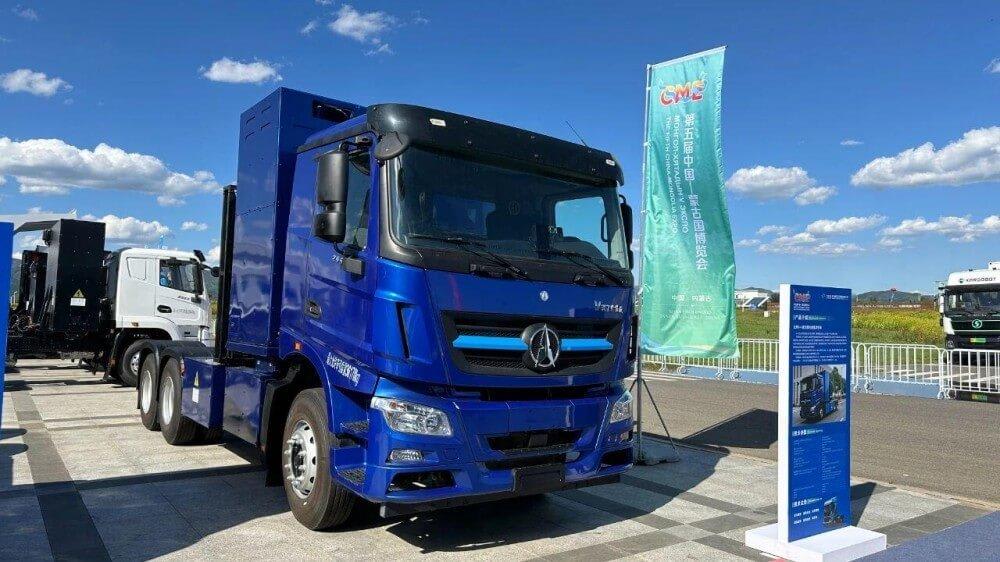
China Electric Truck Sales Surge 45%, Driving New Demand for Lithium
China electric truck sales are creating a new source of demand for lithium as rising fuel costs push transport companies towards battery-powered vehicles. The shift is bringing fresh attention to a battery metal that has struggled with falling prices and concerns about excess supply.
According to a Reuters report published on November 23, 2026, electric truck sales in China reached 600,000 units between January and October. That represents a 45% increase compared with the same period last year, based on figures from BofA Global Research.
Electric vehicles now account for approximately 30% of China's truck sales across different vehicle sizes. However, the strongest growth is coming from heavy-duty trucks, which require much larger batteries than passenger cars.
During the first ten months of 2026, sales of heavy electric trucks rose 68% to 262,000 units. The increase highlights how quickly Chinese businesses are adopting electric vehicles for freight transportation, industrial operations, and other commercial activities.
Higher oil prices have played an important role in that transition. As diesel becomes more expensive, transport operators are paying closer attention to the long-term cost of running their vehicles.
For battery manufacturers and lithium producers, the growth offers a promising opportunity. Heavy electric trucks consume substantial amounts of battery materials, creating demand that could support the lithium industry beyond passenger cars and energy storage systems.
However, stronger truck sales have not yet been enough to reverse weakness in lithium prices. The market continues to face uncertainty over global supply, future battery demand, and the pace of new mining projects.
Why China's Electric Truck Boom Is Increasing Lithium Demand
China has spent years promoting the adoption of electric vehicles, supported by its large domestic battery industry and growing charging infrastructure.
Passenger cars initially attracted much of the investment and attention. However, the focus is expanding towards commercial transportation, particularly trucks used by logistics companies, manufacturers, and industrial operators.
These businesses often have different priorities from private car buyers.
A transport company may operate dozens or hundreds of vehicles, making fuel and maintenance expenses a major part of its operating costs. Even modest savings on each truck can become significant across a large fleet.
As oil prices rise, battery-powered trucks can become more attractive, especially for businesses operating predictable routes or returning vehicles to central charging facilities.
The change has been particularly noticeable in China's heavy-duty truck market.
Heavy electric trucks often need large battery packs to move substantial loads over long distances. Consequently, their growing popularity can create more demand for lithium than a similar increase in electric passenger car sales.
Lithium is a key material in rechargeable batteries used by electric vehicles. Although battery designs vary, lithium remains important across the leading technologies used in commercial electric transportation.
The International Energy Agency has identified electric trucks as one of the fastest-growing areas of battery demand, with China playing a central role in that expansion.
The country's established battery manufacturing industry also gives domestic vehicle producers an advantage.
Chinese companies can source batteries, vehicle components, and manufacturing services through a highly developed local supply chain.
Contemporary Amperex Technology, better known as CATL, is particularly important to this market.
The company is one of the world's largest manufacturers of batteries for electric vehicles and energy storage systems. It has identified commercial road transportation as a major opportunity for future growth.
CATL believes heavy-duty trucks could become an important growth market alongside passenger vehicles and stationary energy storage.
The investment implications are substantial.
YJ Lee, a fund manager at Singapore-based Arcane Green Metal Fund, estimates that electric trucks worldwide could consume nearly 7% of global lithium supply in 2026.
By 2030, that share could increase to approximately 12%, equivalent to the lithium demand generated by as many as 11.5 million battery-electric passenger cars.
These are projections rather than confirmed consumption figures. However, they demonstrate why the truck market is attracting increasing attention from lithium investors.
Research firms are also revising their forecasts.
UK-based consultancy SFA Oxford has increased its 2026 lithium demand forecast for heavy-duty electric vehicles by 95% over the past year, according to senior market analyst Lakshya Gupta.
The substantial revision reflects stronger-than-expected adoption of electric commercial vehicles.
China's electric truck industry is also finding customers overseas.
Chinese customs figures show that exports of heavy electric trucks more than doubled to 16,823 units during the four months following the start of US-Israeli strikes on Iran on February 28, 2026.
Approximately half of those shipments went to South and Southeast Asia.
Higher fuel costs in those markets have made electric alternatives more attractive for some transport operators.
For Chinese manufacturers, exports could become an additional source of demand as domestic competition intensifies.
However, wider international adoption will depend on vehicle prices, charging infrastructure, financing arrangements, and the availability of reliable after-sales support.
Why Lithium Prices Are Still Falling Despite Strong Electric Truck Sales
The rapid growth of electric trucks has created optimism among battery manufacturers, but the wider lithium market remains under pressure.
Lithium prices have experienced significant volatility throughout 2026.
After climbing to their highest levels since September 2023 in May, prices have fallen by nearly half, according to the Reuters report.
The decline reflects concerns that lithium production may grow faster than demand.
Mining companies have increased output, while some previously suspended operations have restarted following earlier price increases.
These developments have created expectations of a possible market surplus.
At the same time, demand from other major lithium-consuming industries has been less consistent than investors anticipated.
China's domestic electric passenger car market has shown signs of slower growth, while installations of large energy storage systems have varied from one period to another.
That uncertainty has made buyers cautious about purchasing additional lithium.
Some battery manufacturers are delaying purchases because they expect prices to fall further.
Consequently, growing electric truck sales are providing support for demand without generating enough confidence to lift prices across the market.
Trading activity on China's Guangzhou Futures Exchange has added to the volatility.
Lithium futures have declined as investors anticipate a potential surplus, while physical buyers remain reluctant to build inventories during a falling market.
Supply disruptions and government policies have also complicated price expectations.
Zimbabwe introduced export restrictions affecting parts of its lithium industry, while licensing delays disrupted operations at a major Chinese mine.
Such developments can temporarily tighten supply, but new production and mine restarts may create additional pressure when demand weakens.
The result is a market where prices can change sharply even as long-term demand for batteries continues growing.
Connor Watts, senior lithium analyst at Fastmarkets, believes demand from electric trucks and utility-scale energy storage remains insufficient to support lithium prices on its own.
His assessment highlights the difference between growth in one industry and the overall balance between global lithium supply and demand.
For investors, this distinction is important.
Strong electric truck sales do not guarantee that lithium prices will recover immediately. The market must also absorb production from existing mines and new projects.
Battery manufacturers may benefit from lower material costs because cheaper lithium can reduce the expense of producing battery cells.
That could make electric trucks more competitive against diesel vehicles, particularly for businesses looking to reduce operating costs.
However, prolonged low prices can create difficulties for mining companies.
Some producers may delay expansion projects, reduce spending, or suspend operations if lithium prices remain below profitable levels.
Those decisions could affect future supply when battery demand rises again.
The growing electric truck market therefore creates opportunities across the industry, but the benefits will not be distributed evenly.
Vehicle manufacturers could gain from cheaper batteries, while lithium producers may have to manage weaker selling prices.
Meanwhile, businesses investing in commercial electric fleets will continue weighing purchase costs against fuel savings, charging needs, and vehicle performance.
As of November 23, 2026, China's electric truck market is expanding rapidly, with heavy-duty vehicles leading the growth.
The trend is encouraging lithium investors to reconsider how commercial transportation could influence future battery demand.
However, the industry's longer-term outlook will depend on whether electric truck adoption continues expanding quickly enough to absorb growing lithium production.
China's experience shows that commercial vehicles are becoming an important part of the global shift towards electric transportation.
For the lithium market, the opportunity is becoming clearer. The challenge is turning rising demand into a more balanced market where producers can benefit from that growth.