Amazon Decart Acquisition Could Challenge Nvidia's AI Chip Dominance
The Amazon Decart acquisition is bringing a new challenge to Nvidia's dominance in artificial intelligence computing, as the cloud giant turns to software to make its own AI chips more competitive. Amazon has agreed to acquire the optimization technology and engineering team behind Israeli startup Decart in a transaction reportedly worth $7.5 billion.
Announced on November 23, 2026, the agreement gives Amazon access to the Decart Optimization Stack (DOS), software designed to help artificial intelligence models run faster and more efficiently across different processors.
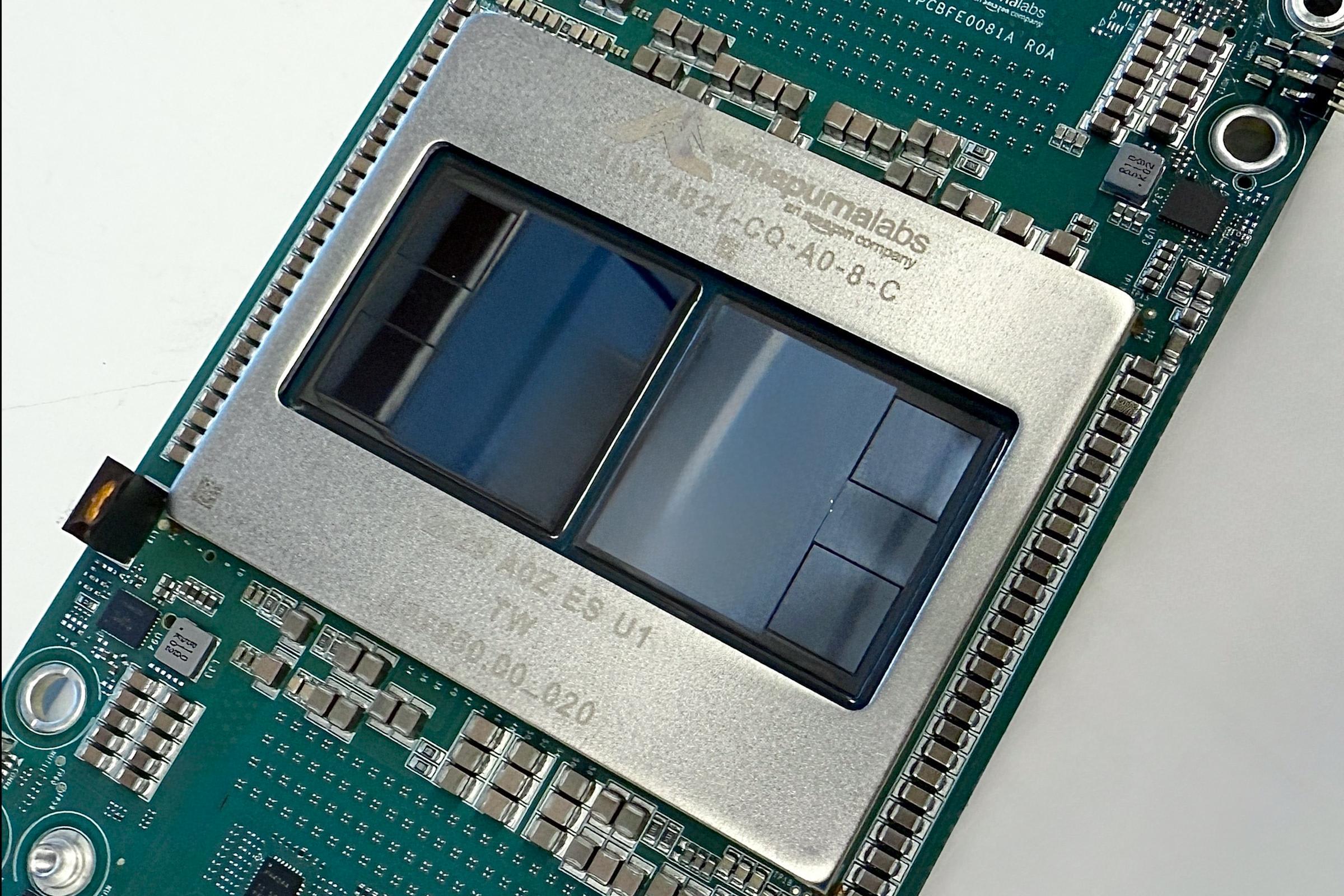
The deal comes as Amazon Web Services expands its Trainium chip business. AWS already uses these processors to support demanding AI workloads, but Amazon wants to make its custom hardware attractive to more businesses that currently depend on Nvidia.
However, developing a powerful chip is only part of that challenge. Companies also need software that allows their existing AI applications to work efficiently on new hardware without requiring expensive changes.
That is where Decart could make a difference.
The startup has developed tools that improve how AI models use computing resources. Its technology has already been tested on processors from Amazon, Nvidia and Google, giving the company valuable experience across competing chip platforms.
Although Amazon has confirmed the acquisition agreement, it has not disclosed the price. The reported $7.5 billion figure comes from Bloomberg, which cited a person familiar with the transaction.
The agreement also remains subject to regulatory approval and other closing conditions. Therefore, Amazon has not yet completed the purchase.
Why Amazon Wants Decart's AI Software to Strengthen Trainium
Amazon has spent years developing processors that reduce its dependence on external semiconductor suppliers.
Its Trainium chips are designed to handle demanding AI workloads, including model training and inference. They are part of a broader strategy to give AWS customers alternatives to Nvidia's widely used processors.
However, Nvidia's competitive advantage extends beyond the chips themselves.
The company has built an extensive software ecosystem that helps developers run AI applications, manage computing resources and improve model performance.
Many businesses have invested heavily in tools designed around Nvidia's hardware.
Consequently, moving those applications to another chip platform can require considerable engineering work, even when alternative processors offer lower operating costs.
Amazon believes Decart's technology could help reduce that difficulty.
The Decart Optimization Stack improves how AI models interact with different computing systems. It is designed to make better use of available processing capacity while reducing unnecessary computation.
For businesses operating AI services at scale, these improvements could produce significant savings.
A company handling millions of AI requests each day may benefit from even a small reduction in computing costs.
However, performance improvements depend on the model, hardware configuration and software being used. Decart's technology will still need to demonstrate consistent results across customer workloads.
Amazon has already worked with Decart since 2025.
According to Amazon, the collaboration has produced promising results on Trainium processors through improvements involving both hardware and software.
The acquisition is expected to accelerate that work.
Amazon will also bring Decart's three co-founders, Dean Leitersdorf, Orian Leitersdorf and Moshe Shalev, into its business alongside a team of AI researchers and engineers.
Their expertise could help Amazon improve its chip optimization tools and make Trainium easier for developers to adopt.
Decart became known for building interactive AI video systems and world models, including Oasis 3.
These applications can generate visual environments that respond to user actions in real time.
However, Amazon's agreement specifically focuses on the proprietary technology behind DOS and the engineering team associated with it.
The company has not announced that it is purchasing every Decart product or taking ownership of its entire business.
That distinction is important because the strategic value of the deal lies primarily in computing efficiency.
Amazon wants to improve how AI models run on its processors, rather than simply adding another AI video application to its portfolio.
The agreement also follows earlier acquisition interest in Decart.
According to Bloomberg, Anthropic explored purchasing the startup for approximately $6 billion before discussions ended.
Nvidia, which participated in Decart's $300 million funding round in May 2026, was also reportedly considered a potential buyer.
That investment valued Decart at approximately $4 billion.
The reported Amazon transaction therefore represents a substantial increase over its previous valuation, although the figures are not directly comparable because the new agreement concerns specified technology and personnel.
How the Decart Deal Could Change Amazon's Competition With Nvidia
Amazon's strategy reflects a broader shift in the AI semiconductor market.
For years, competition focused heavily on producing faster and more powerful processors.
However, businesses are increasingly concerned about how efficiently those processors run real applications.
The cost of operating AI models has become a major consideration as companies expand their use of chatbots, automated software development tools and AI agents.
Faster processing can improve customer experiences, while lower computing costs can make AI services more profitable.
Amazon hopes its combination of Trainium hardware and Decart software will provide a more attractive option for these customers.
The company also plans to expand access to Trainium beyond its existing cloud infrastructure.
That ambition could put Amazon into more direct competition with Nvidia, particularly among businesses seeking alternatives to expensive AI computing equipment.
However, selling processors outside AWS introduces additional challenges.
Customers will expect reliable development tools, technical support and compatibility with their existing applications.
They must also be confident that Amazon's processors can deliver the performance promised under real operating conditions.
Decart's software could help address some of these requirements, but it will not eliminate every barrier to adoption.
The acquisition is also part of a longer history of major technology companies purchasing Israeli semiconductor expertise.
Amazon acquired Annapurna Labs in 2015, providing an important foundation for its custom chip development business.
Nvidia completed its $6.9 billion acquisition of Mellanox Technologies in 2020, strengthening its capabilities in high-performance networking.
Intel also acquired Israeli AI chipmaker Habana Labs for approximately $2 billion in 2019.
These transactions demonstrate the importance of Israeli engineering expertise in the global semiconductor industry.
Decart represents another example, although its primary contribution to Amazon will be software optimization rather than a new physical chip architecture.
The agreement has attracted interest from technology investors who believe efficient computing will become increasingly valuable.
However, the commercial impact remains uncertain.
Amazon must integrate Decart's technology into its existing systems, retain the engineering talent involved and demonstrate meaningful improvements for customers.
Nvidia also continues to invest in its own processors, networking technology and software tools.
Its established position gives it advantages in developer adoption, product availability and customer relationships.
Therefore, Amazon is unlikely to challenge Nvidia's leadership through one acquisition alone.
Instead, the Decart agreement could help Amazon remove some of the obstacles preventing customers from adopting alternative hardware.
As of November 24, 2026, the acquisition remains an announced agreement rather than a completed transaction.
The next important developments will include regulatory approval, integration of the Decart team and measurable performance improvements across Trainium-based AI services.
For Amazon, success will depend on whether its processors become easier and cheaper for customers to use.
For Nvidia, the transaction highlights a growing competitive threat from cloud providers investing in both custom hardware and the software needed to support it.
The wider implication is clear: the future of AI computing will depend increasingly on how much useful performance companies can extract from their chips, not simply how powerful those chips appear on paper.