Uber Driverless Robotaxi Testing Begins Ahead of 2027 Public Launch
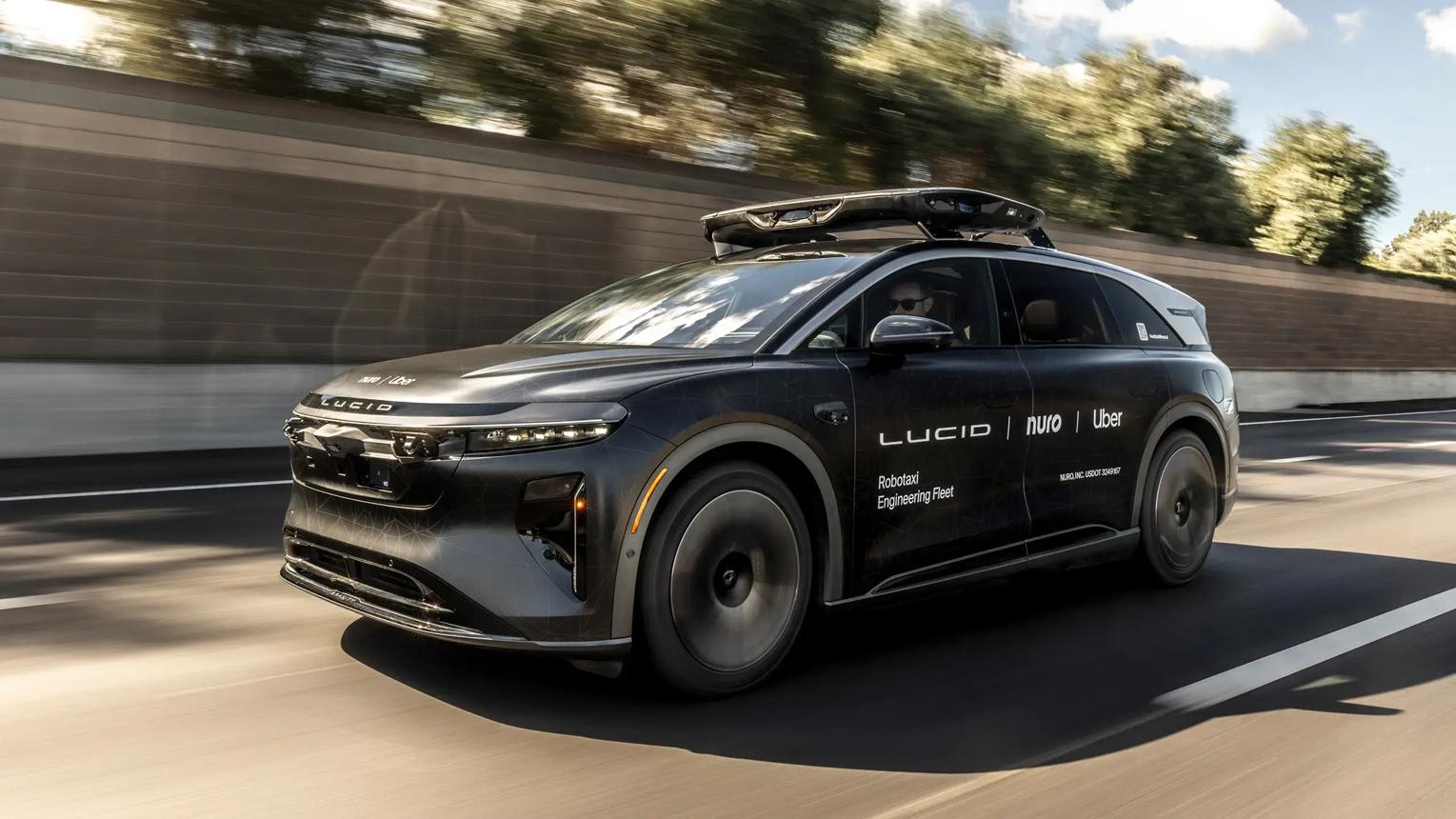
Uber driverless robotaxi testing has entered a major new phase as the ride-hailing company and its partners, Nuro and Lucid Motors, begin operating autonomous electric SUVs on public roads without human safety drivers. The milestone brings Uber closer to launching a commercial robotaxi service in the San Francisco Bay Area in early 2027.
The companies confirmed on November 24, 2026, that specially equipped Lucid Gravity SUVs are now undergoing fully driverless testing. Unlike earlier trials, the vehicles no longer require a human safety operator sitting behind the steering wheel.
The development follows almost a year of supervised testing and several months of preparation after Nuro received permission to conduct driverless trials in California.
Although the vehicles are now operating without safety drivers, the service is not yet available to the general public. Uber and Nuro plan to begin offering driverless rides to employees before opening bookings to paying passengers.
The companies are targeting the first quarter of 2027 for their initial commercial launch. However, the date remains a target, and wider availability will depend on safety testing, regulatory requirements, and operational readiness.
The project brings together three companies with different responsibilities. Lucid provides the electric vehicles, Nuro develops the autonomous driving technology, and Uber manages the ride-hailing service and customer experience.
For Uber, the move represents another important step towards building a business where passengers can request rides without a human driver. For Lucid and Nuro, it provides an opportunity to bring their technologies into a large commercial transportation network.
How Uber's Driverless Robotaxi Testing Works in California
Uber's latest announcement marks a significant change from the supervised testing that began in the San Francisco Bay Area in late 2025.
During those earlier trials, Nuro operated Lucid Gravity SUVs with trained safety drivers behind the wheel. Their presence allowed engineers to observe the vehicles' behaviour and intervene when necessary.
The testing helped Nuro collect information about how its autonomous system responds to traffic, road markings, pedestrians, cyclists, and unexpected driving conditions.
However, the company needed additional regulatory permission before removing the human safety operator.
In 2026, California's Department of Motor Vehicles authorised Nuro to test its autonomous vehicles without safety drivers on specified public roads.
The state's permit records include Lucid Gravity vehicles and identify approved testing areas in Santa Clara and San Mateo counties.
The authorisation also establishes operating conditions, including speed limits and permitted weather conditions. These restrictions are intended to keep testing within environments the system has been assessed to handle.
Receiving the permit was an important milestone, but it did not mean Nuro was immediately ready to remove safety drivers from every vehicle.
Instead, the company continued supervised road testing, closed-course trials, and computer simulations before advancing to fully driverless operations.
The latest phase allows engineers to evaluate how the technology performs without a human sitting behind the wheel.
The vehicles use Nuro's autonomous driving system, known as the Nuro Driver, which processes information from several types of sensors.
High-resolution cameras help the vehicle identify road signs, traffic lights, pedestrians, and other vehicles.
Meanwhile, lidar sensors use laser measurements to build a three-dimensional picture of the surrounding environment.
Radar provides additional information about the location and movement of nearby objects.
By combining these systems, the vehicle can assess driving conditions and make decisions about steering, braking, acceleration, and navigation.
However, autonomous driving remains technically demanding.
A vehicle may encounter unusual construction arrangements, unpredictable road users, or weather conditions that affect visibility.
Consequently, testing must demonstrate that the system can respond safely within its approved operating conditions.
Nuro is also using simulation and controlled testing environments to evaluate scenarios that may be difficult or unsafe to reproduce on public roads.
The company's next planned step is employee-only driverless rides, which will help test the service before passengers can book through Uber.
These trials will provide opportunities to assess pickup locations, passenger interactions, vehicle reliability, and the wider operation of the fleet.
Lucid has begun manufacturing production versions of the Gravity robotaxis at its Arizona facility.
The vehicles were developed around the Lucid Gravity electric SUV, which provides a spacious cabin suitable for a premium ride-hailing service.
Uber has also contributed to the interior experience.
The robotaxis feature passenger controls designed to make riding without a human driver more comfortable.
Riders will be able to interact with in-car displays and adjust certain settings during their journeys.
These features matter because a driverless vehicle changes the relationship between passengers and the transportation service.
Without a driver available to answer questions or provide immediate assistance, customers need clear information about their trip and accessible support options.
Uber's role is therefore broader than simply displaying robotaxis in its app. The company must also manage fleet operations, passenger support, and the overall booking experience.
Why the Lucid and Nuro Partnership Matters for Uber's 2027 Launch
The project began taking shape in July 2025 when Uber announced a major partnership with Lucid and Nuro.
The agreement was designed to create a premium autonomous transportation service using electric vehicles equipped with Nuro's self-driving technology.
It also came with significant financial commitments.
Uber initially agreed to invest $300 million in Lucid, supporting the automaker's expansion into commercial autonomous vehicles.
According to subsequent reporting, that commitment has increased to approximately $500 million.
Uber also agreed to invest nearly $500 million in Nuro, giving the autonomous driving startup additional resources to develop and commercialise its technology.
The investments reflect Uber's interest in expanding its autonomous vehicle operations without developing every component internally.
Instead, the company is building partnerships with businesses that specialise in vehicle manufacturing and autonomous driving software.
The arrangement offers advantages for all three companies.
Lucid gains access to a major commercial customer at a time when competition in the electric vehicle industry remains intense.
Uber's original agreement covered the purchase of at least 20,000 Lucid Gravity vehicles over six years. Nuro's November 24 announcement now refers to a commitment of at least 35,000 equipped vehicles, indicating a larger fleet ambition.
However, those figures describe purchase commitments rather than vehicles already manufactured, delivered, or operating commercially.
For Nuro, the partnership represents an important development in its business strategy.
The company originally focused on small autonomous vehicles designed to deliver goods.
However, it changed direction in 2024, deciding to license its self-driving technology to automakers and mobility companies.
That shift allowed Nuro to concentrate on software and autonomous driving systems instead of building its own delivery vehicle business.
The partnership with Uber and Lucid provides a large-scale opportunity to demonstrate that approach.
Meanwhile, Uber gains a potential new source of transportation capacity without relying entirely on traditional human-driven vehicles.
However, operating robotaxis commercially also introduces expenses that ordinary ride-hailing platforms handle differently.
Uber will need to manage vehicle maintenance, charging, cleaning, insurance, fleet availability, and customer assistance.
Removing the driver does not eliminate those costs.
The company must also demonstrate that autonomous vehicles can operate reliably and attract enough passengers to support the investment.
Competition is another important factor.
Waymo has already established commercial driverless services in several US markets, while other autonomous vehicle developers are expanding their testing and deployment plans.
Uber therefore faces pressure to bring more robotaxis onto its platform while maintaining customer confidence.
The Lucid-Nuro project is part of that broader effort.
Testing is also underway in Houston, Texas, where vehicles have been operating with human safety drivers.
Houston is expected to become another commercial market in 2027, following the initial Bay Area launch.
However, the companies have not announced a confirmed public opening date for Houston.
The long-term plan is to expand the service across additional markets if the technology meets safety, regulatory, and commercial requirements.
For Lucid, that could create a more predictable market for its Gravity vehicles. For Nuro, it could establish its autonomous driving platform as a product other transportation companies may want to adopt.
As of November 24, 2026, the confirmed milestone is fully driverless public-road testing in the San Francisco Bay Area.
Employee rides are expected to follow, while the first commercial service remains scheduled for the first quarter of 2027.
The next several months will show whether the partnership can move successfully from controlled testing to daily passenger operations.
For Uber, the challenge is turning a promising autonomous vehicle demonstration into a transportation service that people can use safely, reliably, and conveniently.
The latest testing milestone brings that ambition closer, but the real measure of success will come when passengers begin booking driverless Lucid Gravity rides through the Uber app.