Pinterest Parental Controls Now Let Parents Limit AI Content for Teens
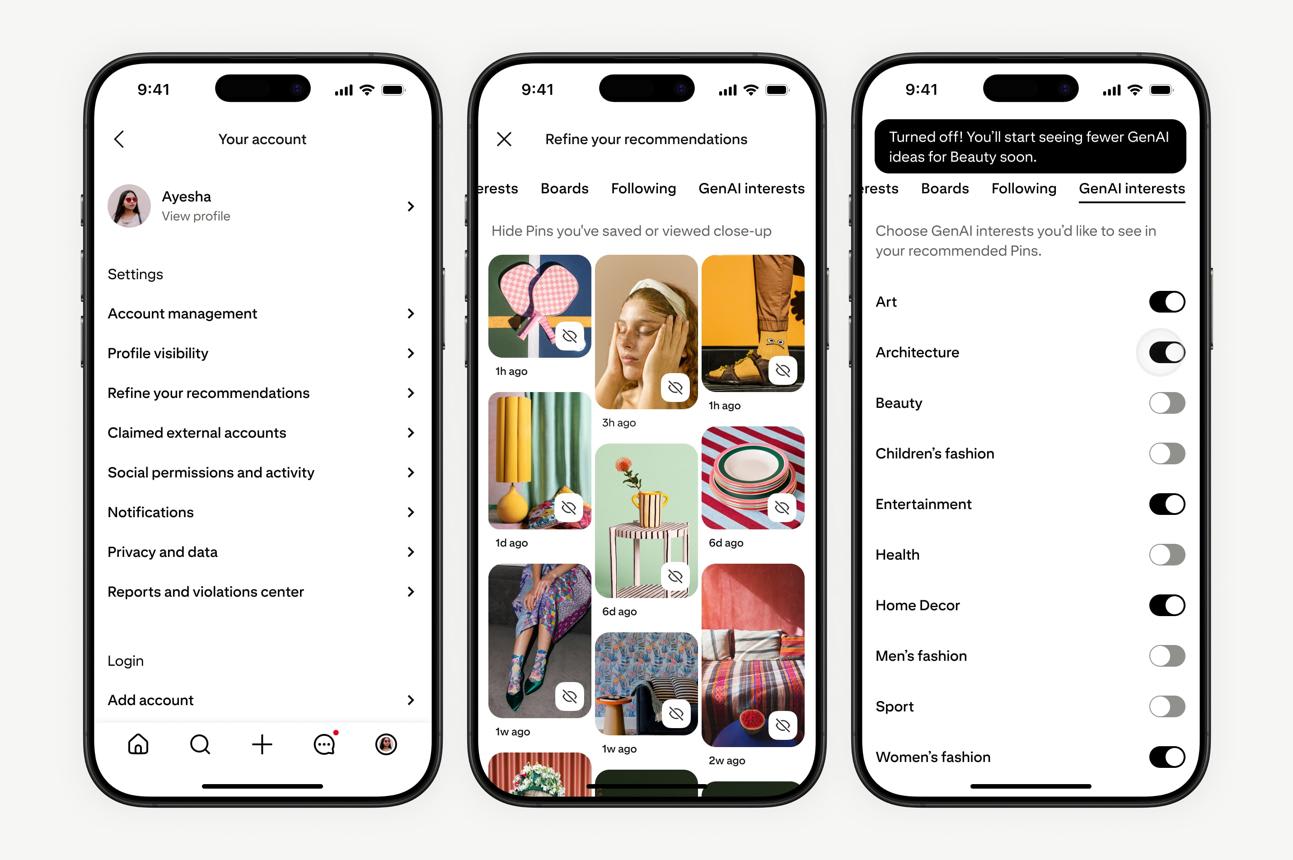
Pinterest parental controls now give parents more say over how much AI-generated content appears in their teenagers' recommendations, marking an important change in how social media platforms approach online safety. The new feature allows families to reduce exposure to synthetic images and other AI-created material without preventing teenagers from using Pinterest to explore their interests.
Announced on November 23, 2026, the update introduces additional settings for controlling video autoplay, notifications, and personalised advertising. Pinterest has also redesigned its Parental Controls page, bringing several existing and new safety options into one place.
The development comes as parents and child safety advocates question the growing amount of AI-generated material appearing on social media. While artificial intelligence has made content creation easier, it has also made it harder for users to distinguish genuine photographs and original artwork from computer-generated images.
For teenagers, that difference can be particularly important. Social platforms play a role in shaping their interests, expectations, and understanding of the world. As a result, families are increasingly asking for clearer ways to influence the content young people encounter online.
Pinterest's decision stands out because many competing platforms have focused on restricting teenagers' access to AI chatbots rather than controlling AI-generated recommendations.
However, the new setting does not promise to remove every AI-generated image from a teenager's feed. It adjusts the amount of such content shown through recommendations, and its effectiveness will depend partly on how accurately Pinterest identifies AI-created material.
The company believes giving parents more control can help families make decisions that reflect their preferences while allowing teenagers to continue using the platform.
How Pinterest Parental Controls Will Limit AI-Generated Content
Pinterest has long been a place where people discover ideas for fashion, home decoration, recipes, beauty, and creative projects. Much of the experience depends on recommendations that introduce users to images based on their interests.
However, the growing use of generative AI has changed the type of content appearing in those recommendations.
AI tools can now produce realistic photographs, illustrations, and design concepts within seconds. Although some of these creations can be useful, others may misrepresent products, people, or real-world experiences.
For example, a teenager searching for hairstyle inspiration could encounter an AI-generated image showing an unrealistic result. Someone looking for a room makeover might see furniture or interior designs that do not exist outside a computer-generated picture.
These images are not necessarily harmful. However, they can become frustrating or misleading when users expect authentic photographs and practical inspiration.
Pinterest began addressing this concern in 2025 by introducing labels for AI-modified and AI-generated images. The company later expanded its controls to help users see fewer AI-generated Pins in certain recommendation categories.
Those measures gave individuals more control over their feeds, but they did not always prevent AI-generated content from appearing.
The latest update extends similar choices to parents and caregivers.
Through the redesigned Parental Controls page, parents can adjust the amount of AI-generated material recommended to their teenagers.
This makes AI content preferences part of the platform's wider approach to family safety rather than a setting that teenagers manage entirely on their own.
However, parents should understand the difference between limiting content and blocking it.
Pinterest has not described the feature as a complete filter that guarantees all AI-created images will disappear. Instead, it gives families a way to reduce how much of that material the recommendation system displays.
The company has also introduced more control over videos.
Parents can now decide whether videos should play automatically while their teenager browses Pinterest. Turning autoplay off may reduce unwanted interruptions and give young users more choice about which videos they watch.
Meanwhile, new notification settings allow caregivers to adjust how frequently the platform sends alerts.
These controls cover push notifications, browser notifications, emails, and messages displayed within the app.
For families concerned about constant phone alerts, the additional settings could make it easier to create a less distracting experience.
Pinterest has also made advertising preferences easier to manage.
The updated page allows caregivers to find existing options related to personalised ads and the platform's social features, including comments and mentions.
Importantly, the controls can be protected through a four-digit parental passcode.
When the passcode is enabled, teenagers need parental permission before making protected settings less restrictive.
That gives parents a way to maintain agreed safety preferences while still allowing their children to use Pinterest independently.
The page also includes direct links to device-level Screen Time and Location settings on iOS and Android.
These links help families connect Pinterest's controls with broader protections available through their smartphones.
However, Pinterest does not replace the device's operating-system controls. Parents may still need to manage those settings separately.
Why AI-Generated Content Is Becoming a Major Teen Safety Concern
Pinterest's latest changes reflect a wider debate about the influence of artificial intelligence on young internet users.
For years, parents have raised concerns about harmful content, excessive screen time, and recommendation systems that encourage prolonged use.
Generative AI has introduced additional challenges.
Because AI tools can produce large volumes of images and videos quickly, social platforms may struggle to identify low-quality, misleading, or repetitive material before it reaches users.
This content is sometimes described as AI slop, a term commonly used for mass-produced AI material that offers little original value.
However, AI-generated content covers many different types of material. Creative illustrations, useful design concepts, and clearly labelled synthetic images should not automatically be treated as harmful.
The more important questions are whether content is presented accurately, whether users want to see it, and whether it creates inappropriate expectations.
Child safety organisations have increasingly called on platforms to address these issues.
In April 2026, advocacy group Fairplay and more than 200 organisations and experts urged YouTube to remove AI-generated content from YouTube Kids and prevent AI-generated videos from being recommended to users under 18.
Their concerns included the quality of children's online experiences and the potential influence of automated content.
However, the full effects of AI-generated recommendations on teenagers' wellbeing are still being studied. Claims of harm should be assessed using evidence rather than assuming every AI-created image has the same impact.
Other technology companies have introduced restrictions involving specific AI features.
Snapchat previously gave parents options to limit their teenagers' interactions with its My AI chatbot.
Meta also paused teenagers' access to certain AI characters while reviewing the experience.
WhatsApp has introduced parental controls that affect how teenagers interact with Meta AI, including some content creation features.
Pinterest is taking a different approach by addressing the recommendations users encounter during ordinary browsing.
That distinction matters because teenagers do not need to open an AI chatbot to see AI-generated material. It may appear automatically while they search for ideas or scroll through their feeds.
For parents, having control over recommendations may therefore be more useful than limiting access to a single AI feature.
The update also builds on Pinterest's existing teen protections.
The platform keeps accounts belonging to users under 18 private by default. It also applies additional restrictions to social interactions and provides options for reporting inappropriate material.
Pinterest has introduced features that discourage teenagers from using the app during school hours and reduce notifications late at night.
These measures are intended to support healthier online habits while preserving access to creative content.
However, no single parental setting can replace conversations about online safety.
Families may still need to discuss how AI images are created, why some visual content can be misleading, and how teenagers can recognise unreliable information.
Parents should also review their children's settings periodically, particularly as platforms introduce new features.
For Pinterest, the challenge will be demonstrating that the additional controls work consistently and remain simple enough for families to use.
The company has not disclosed how much the AI-content setting will reduce recommendations across different categories or how many families have started using it.
As of November 24, 2026, the new Parental Controls page has been announced with settings for AI-generated recommendations, notifications, video autoplay, and existing privacy protections.
The update signals growing recognition that families want more influence over what recommendation systems show teenagers.
Whether other major platforms introduce similar controls will depend on how the debate over AI-generated content develops.
For now, Pinterest has taken a meaningful step towards giving parents more choice over their teenagers' online experience. The next test will be how effectively those preferences shape the content young users actually see.